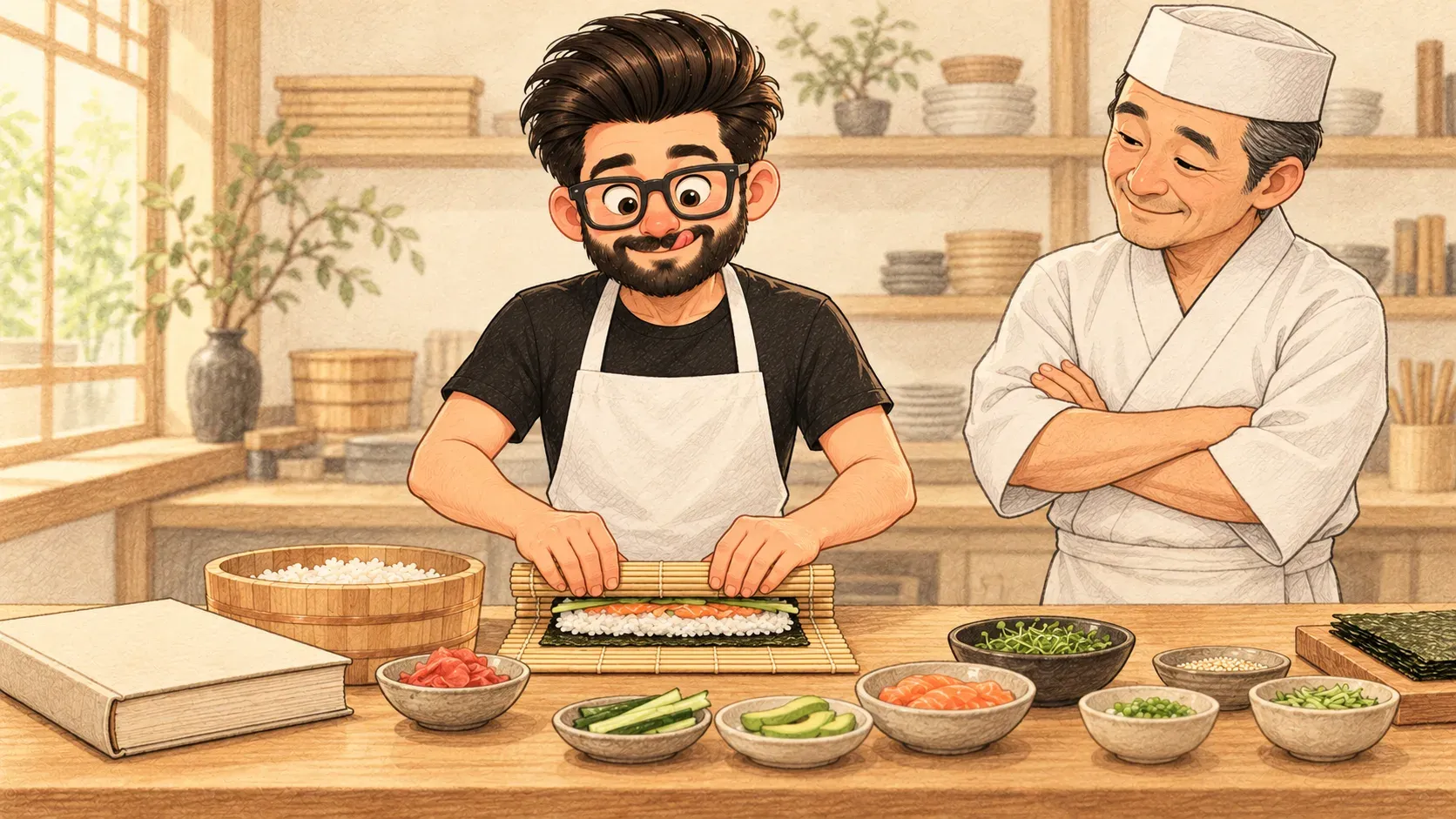

A good all-round chef can cook almost anything. Send them on a sushi course and they'll get much better at sushi.
A trained chef can cook almost anything decently. Now send them on a two-week sushi course, practising roll after roll. Their sushi gets much better. They’re still the same chef.
Fine-tuning does that for AI. It takes a model that’s already trained and gives it extra practice on examples of one particular job.
What it’s good for
- a consistent tone, like your company's way of writing
- a particular format, like always answering in a set structure
- a narrow skill, like sorting support tickets into categories
What you need
Hundreds or thousands of good examples of the job done right. The quality of those examples matters far more than the number.
What it isn’t
It isn’t the main way to teach an AI new facts. For “know our latest prices”, RAG usually works better, because you can update the documents any time.
Where the comparison breaks down
A chef on a sushi course doesn’t forget how to make soup. A fine-tuned AI can sometimes get worse at things outside its new speciality.
How the words fit together
Training builds the general model. Fine-tuning specialises it. RAG gives it documents to look up instead.
Before fine-tuning, try a clearer prompt or RAG first. They're cheaper and often get you most of the way.

When you'll hear it
“We fine-tuned it on our tickets.” We gave the AI extra training using our own past support conversations.
“It's a fine-tuned model.” A general AI that's had extra training for one specific job.
“Fine-tuning won't add new facts well.” It's better at teaching a style or habit than at teaching lots of new information.
“Would a better prompt or our documents get us the same result, without the cost of fine-tuning?”