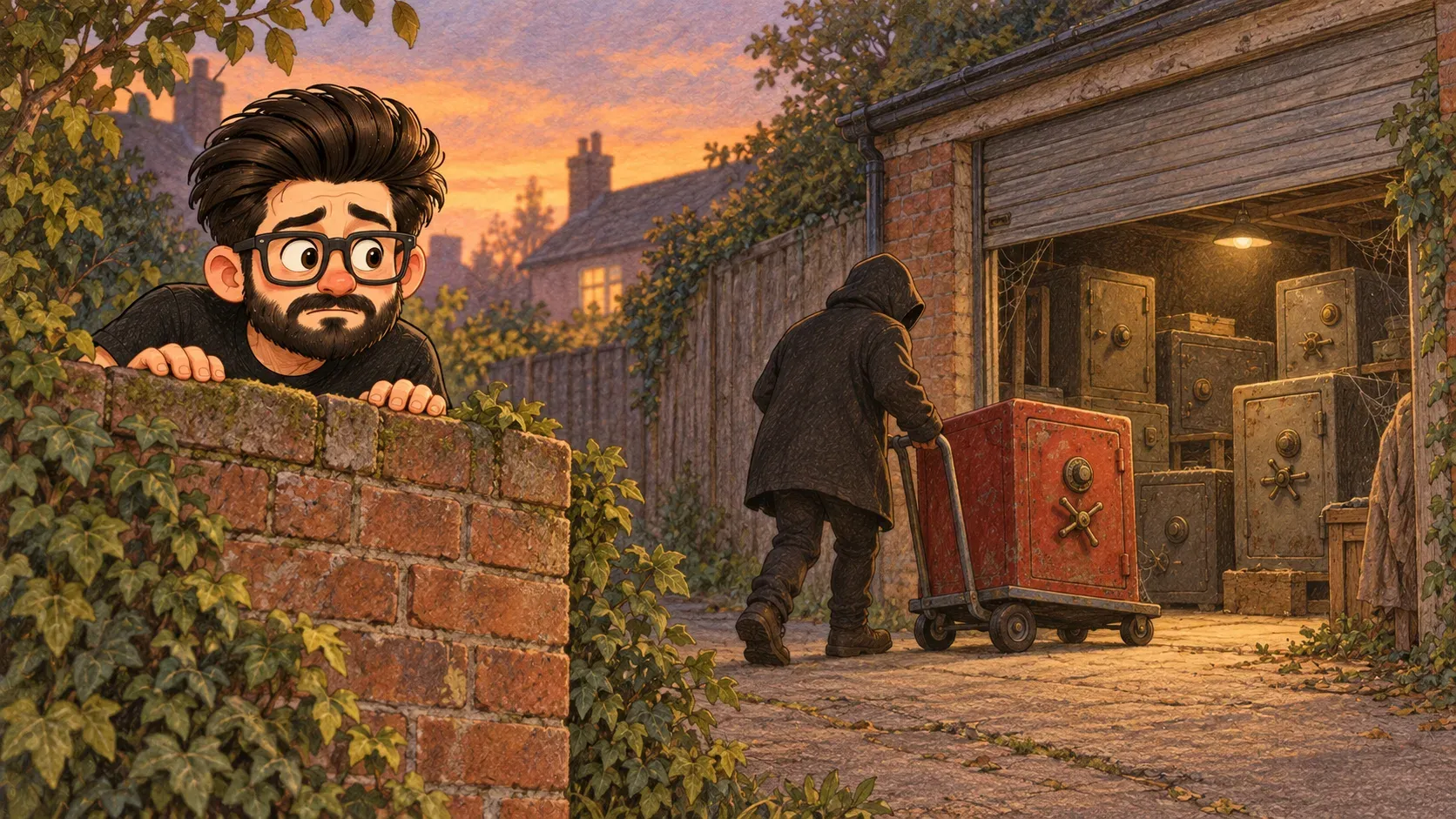

Some thieves don't need to open the safe today. They take it home and wait for a better crowbar.
A thief can’t open a safe. So they take the whole safe and lock it in a garage. In ten years, when better tools exist, they’ll open it.
That’s harvest now, decrypt later. Attackers copy encrypted data today, store it and wait for a future quantum computer to unlock it.
Why it’s taken seriously
- copying encrypted internet traffic is possible today
- storing huge amounts of it is cheap
- some secrets will still matter in ten or twenty years
So even though a code-breaking quantum computer doesn’t exist yet, data sent today could be at risk later.
The defence
Switching to post-quantum cryptography now. Data encrypted with the new methods should stay locked even after quantum computers arrive.
What it isn’t
It isn’t a reason to panic about everyday things. Your shopping basket from today won’t matter in fifteen years. The concern is long-lived secrets.
Where the comparison breaks down
A stolen safe is missing, so you notice. Copied data leaves no gap: the owner may never know it was taken.
How the words fit together
Encryption locks the data. Harvest now, decrypt later is the waiting game. Post-quantum cryptography closes the gap.
This matters most for secrets that must stay secret for a long time: medical records, state secrets, long-term business plans.

When you'll hear it
“It's a harvest-now threat.” Someone could store our encrypted data today and crack it once quantum computers arrive.
“The data has a long shelf life.” It would still be sensitive in ten or twenty years.
“We need to migrate before Q-Day.” We need new encryption before the day quantum computers can break the old kind.
“Is any of our encrypted data valuable enough that someone might store it and wait?”
