
Windows, macOS, Android, iOS. Every device runs one. Almost nobody stops to think about what it does.
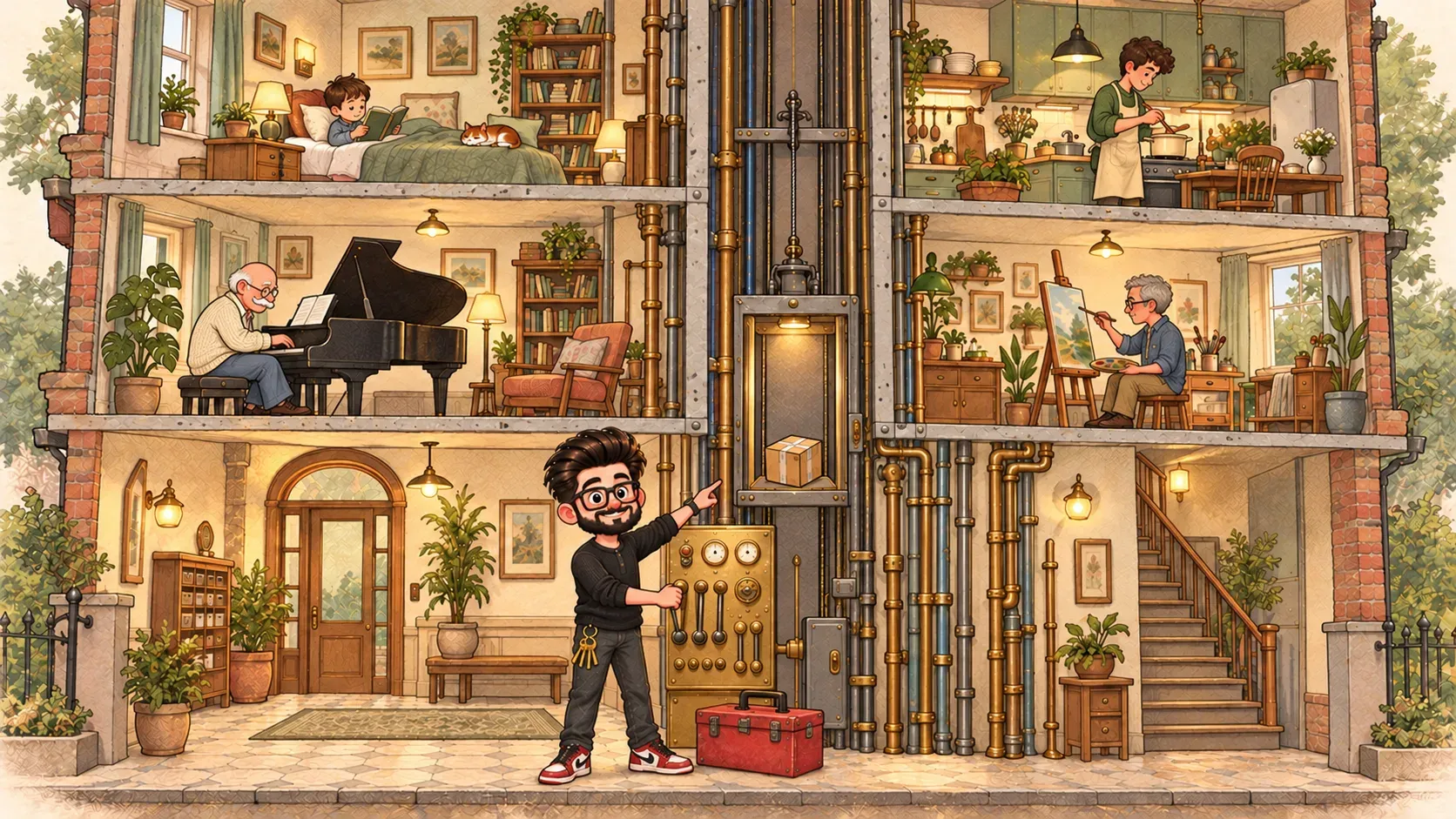
Picture a block of flats. Each flat has someone busy inside: one paints, one cooks, one plays the piano. None of them thinks about the water, the heating, the lights or the lift. Someone downstairs keeps all of that running and makes sure each parcel reaches the right door.
The operating system is that building manager. It’s the main software on your device. It lets every app share the screen, the memory, the storage and the internet without getting in each other’s way.
What it actually does
- starts your device when you switch it on
- gives each app its share of memory and processing power
- looks after your files, so apps can save and open them
- talks to the screen, keyboard, speakers and camera
- keeps apps apart, so one can't read another's private things
The ones you know
Windows and macOS run most laptops and desktops. Android and iOS run most phones. Linux runs most of the servers behind websites and plenty of other gadgets too.
What it isn’t
It isn’t an app you open. It’s what everything else runs on top of. It also isn’t the device itself: the same laptop could run Windows or Linux.
Where the comparison breaks down
A building manager looks after a few flats. An operating system juggles hundreds of tiny jobs every second and switches between them so fast that it all looks like it’s happening at once.
How the words fit together
Apps are built for a particular operating system, which is part of the app vs website story. A software update keeps it safe and working. It shares out the CPU and RAM between apps. Linux is the best-known open source operating system.
"OS" is just short for operating system. When an app says it needs a newer OS, it means your device's operating system needs an update first.

When you'll hear it
“Which OS are you on?” Is your computer running Windows, macOS or Linux?
“It only works on the latest OS.” You need to update your device's main software before the app will run.
“That's an OS problem, not our app.” The fault is in the device's own software, so our app can't fix it.
“Do we need to support older operating systems or only the latest ones?”