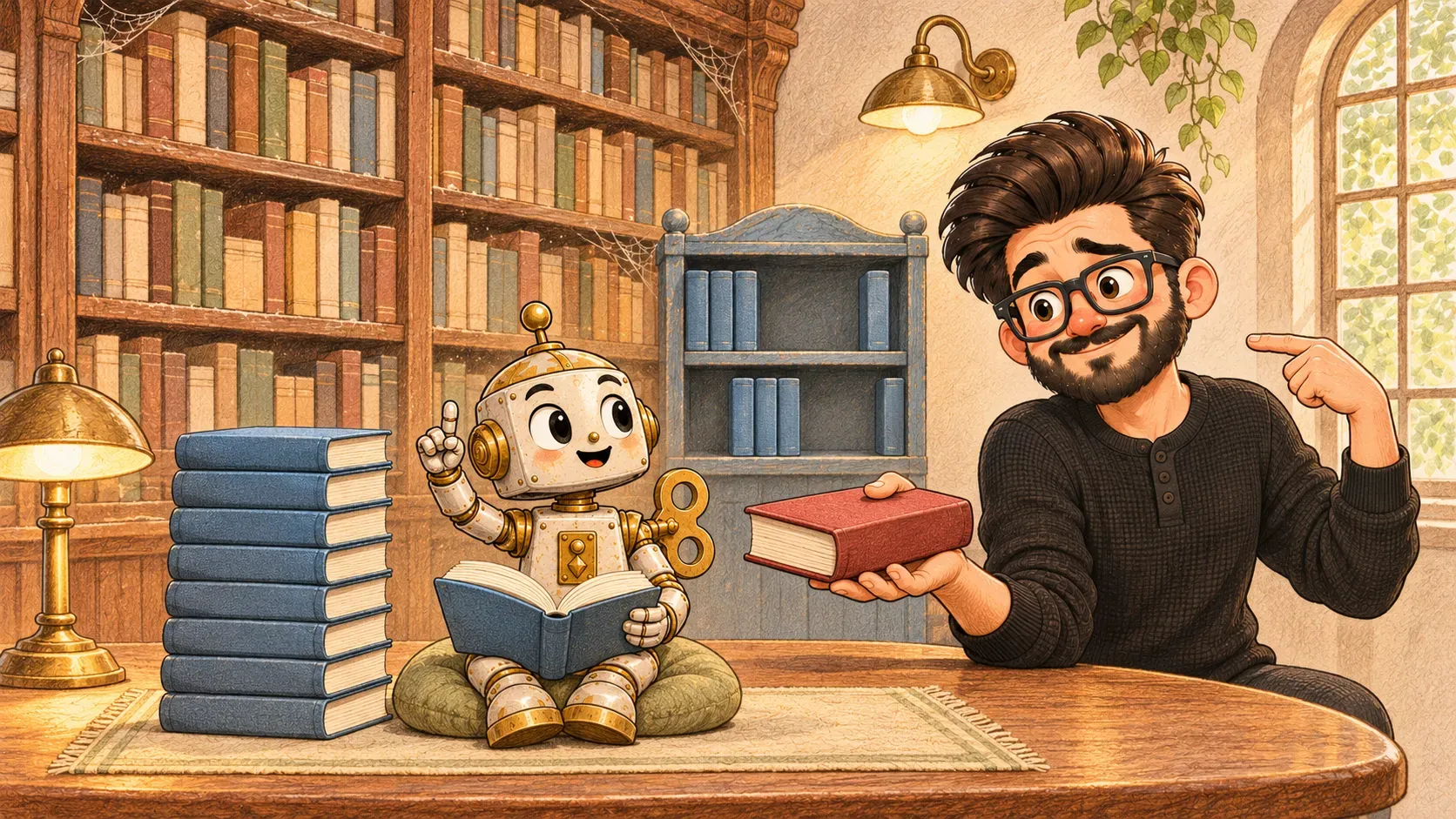

A student who only read one side of a story will sound sure of themselves and still be wrong. An AI can do the same.
Imagine a student who only ever read one newspaper. They aren’t lying when they answer questions. They really believe what they say. But everything they know comes from one side of the story, so some of their answers are unfair.
AI bias is when an AI does the same. It treats some people unfairly or gets things wrong more often for them, because the examples it learned from were lopsided.
Where it comes from
An AI learns from examples, through machine learning. If those examples come mostly from one kind of person, one country or the past, the AI copies those patterns:
- missing people: a face scanner that saw mostly light-skinned faces
- old habits: a hiring tool trained on years of mostly male hires
- one-sided words: a chatbot that learned stereotypes from the internet
Why it matters
When an AI helps decide who gets a loan, a job interview or extra checks at an airport, a lopsided answer isn’t just a mistake. It can be unfair to real people, again and again, and it’s hard to spot because it looks like a neutral machine.
How people fix it
Collect examples that fairly cover everyone. Test how the AI does for different groups, not just on average. And keep a person checking decisions that really matter.
Where the comparison breaks down
A student can go and read the other newspaper. An AI can’t fix itself: once it’s trained, someone has to notice the problem and train it again with better examples.
How the words fit together
Bias usually comes in during training in machine learning, then shows up at inference when the AI is used. An LLM can pick up bias from the internet text it learned from. Bias is different from a hallucination: that’s making something up, while bias is being lopsided.
Before trusting an AI with decisions about people, ask: what was it trained on, and has anyone checked how it does for different groups?

When you'll hear it
“The training data was skewed.” The examples it learned from didn't fairly cover everyone.
“It works worse on darker skin.” It saw far fewer photos of people with darker skin while learning.
“We need a human in the loop.” A person should check the AI's decision before it affects someone.
“Who might this AI get wrong, and how would we even find out?”