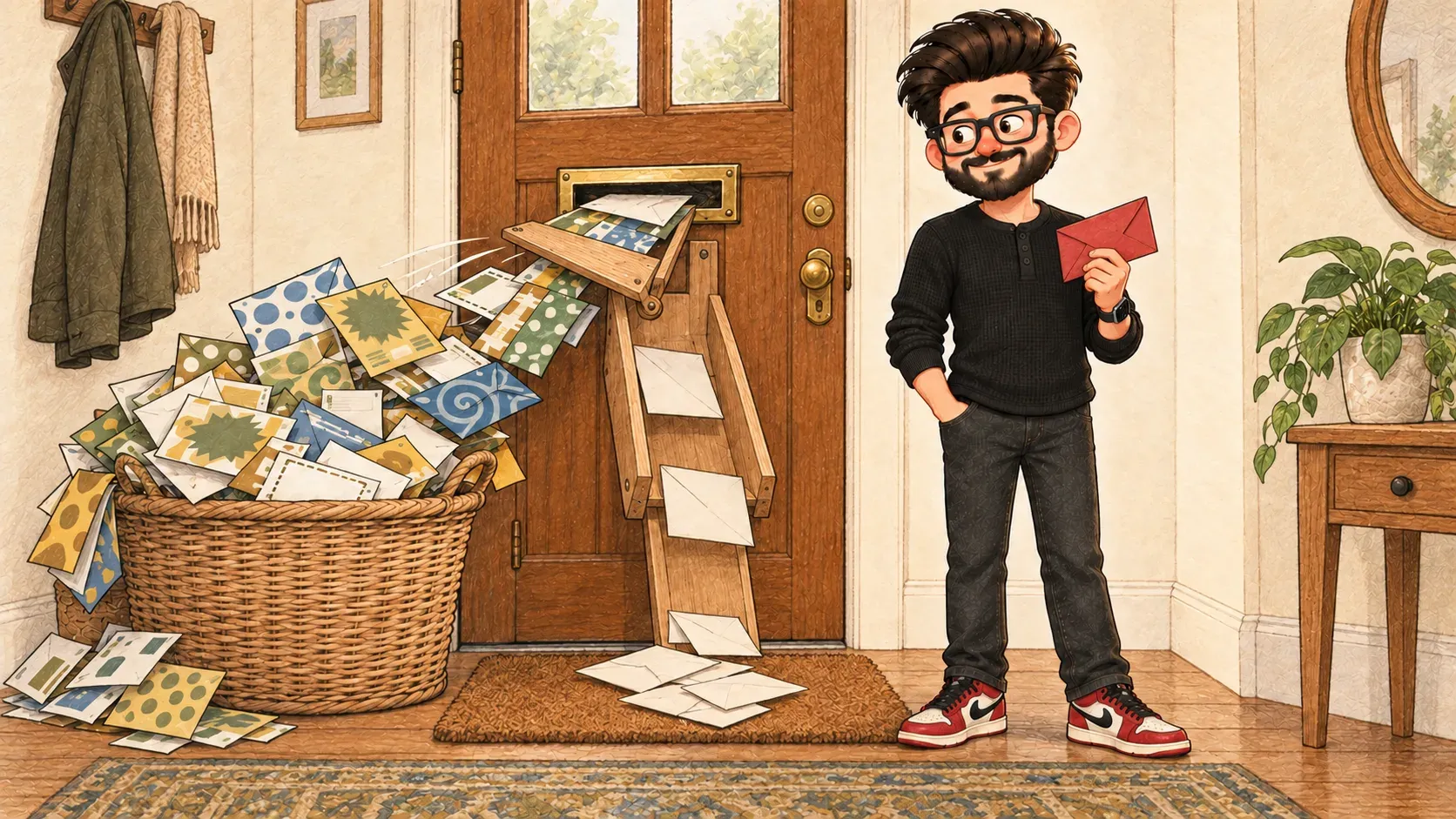

Most of the junk never reaches your doormat. Someone sorts it out on the way.
Think about the post that lands on your doormat. There are a few real letters, then a pile of flyers, offers and things you never asked for. Imagine someone stood at the door and sorted it for you before you came downstairs.
Your email works the same way. Spam is junk mail for the internet: unwanted messages sent to huge numbers of people at once. Your email service sorts most of it into a spam folder before you ever see it.
Where you meet it
- emails offering prizes, cheap medicine or ways to get rich
- text messages about parcels you never ordered
- comments on websites full of strange links
- phone calls from recorded voices
How it gets caught
Your email service looks at every message as it arrives. It checks who sent it, whether thousands of other people got the same thing and whether it looks like messages people have marked as junk before. Much of this is done by machine learning, which learns what junk looks like from millions of examples.
What it isn’t
Spam isn’t always dangerous. Plenty of it is just annoying adverts. But some spam is phishing, which pretends to be your bank or a delivery firm to steal your details. Other spam carries malware, harmful software hidden in an attachment or a link.
Where the comparison breaks down
Junk mail costs the sender paper and postage, so there is a limit to how much they send. Sending an email costs almost nothing. That is why spammers send billions.
How the words fit together
Spam is the big pile of junk. Phishing is the junk that tries to trick you. Malware is the junk that tries to break in. Machine learning is what your email uses to sort it.
Check your spam folder now and then. Real emails sometimes land there by mistake, like a delivery note or a reply you were waiting for.

When you'll hear it
“Check your spam folder.” The email may have been sorted into junk by mistake. Look there before asking for it again.
“Mark it as spam.” Tell your email app this message is junk, so it learns to catch ones like it.
“Our emails are going to spam.” Our customers' email apps think our messages look like junk, so they never see them.
“Are our emails to customers reaching their inboxes or landing in spam?”