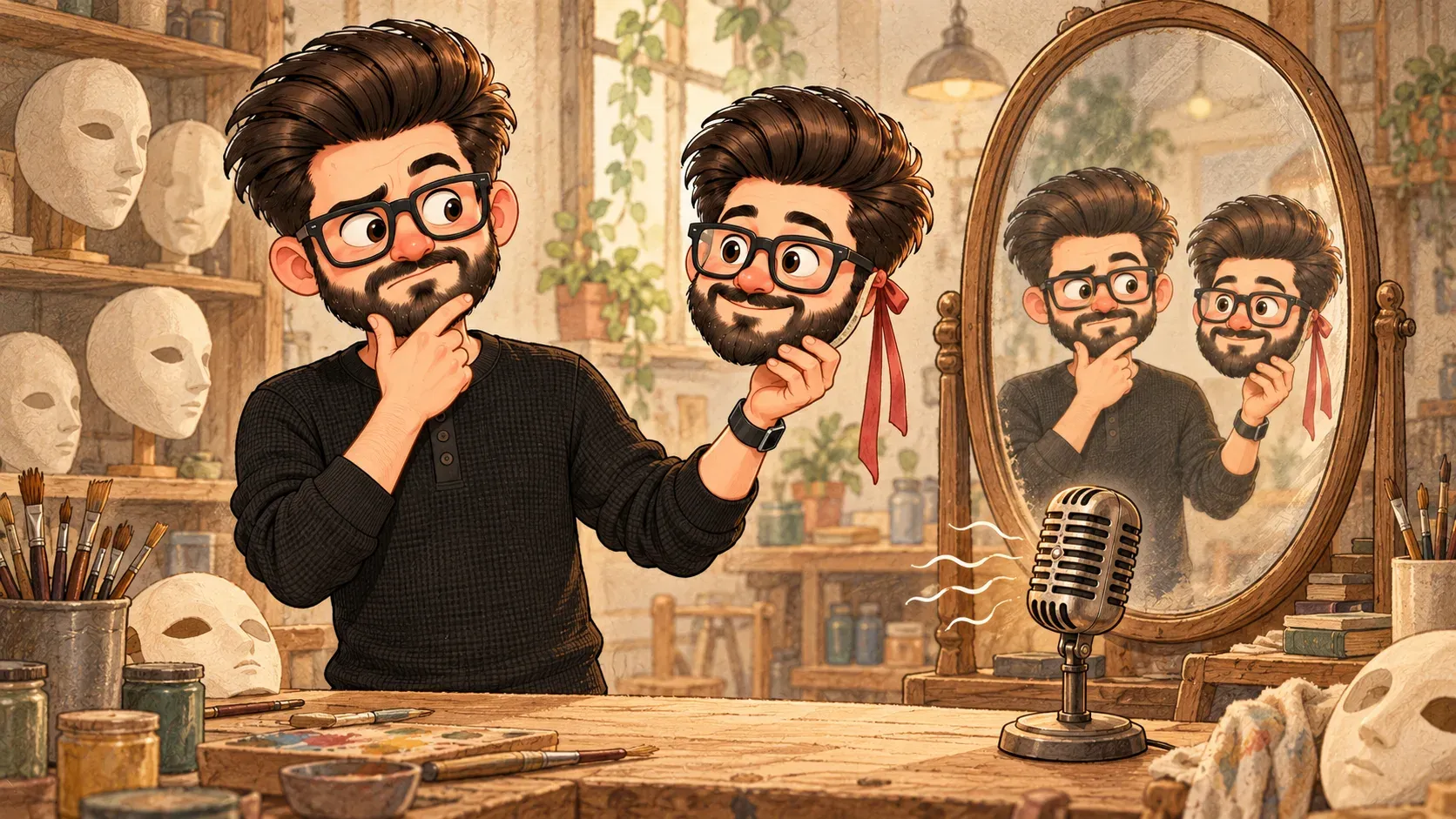

Imagine a mask so good it copies someone's face, their smile and even their voice. Anyone could wear it.
A cheap Halloween mask fools nobody. But imagine a mask so good it copies someone’s face exactly: the way they smile, blink and talk. Add their voice too. Anyone wearing it could walk into a room and be them.
A deepfake is that mask, made by AI. It’s a video, photo or voice recording that looks and sounds like a real person, saying or doing something they never did.
How they’re made
The AI studies lots of photos, videos or voice clips of a person. It learns how their face moves and how their voice sounds. Then it can paint that face onto someone else’s video or read out any words in that voice. A few seconds of someone’s voice can be enough.
Where you meet them
- fake videos of famous people promoting a "get rich" scheme
- a phone call that sounds like a relative in trouble asking for money
- a video call where the "boss" asks for an urgent payment
- harmless fun too, like films bringing back a younger actor
How to spot one
- odd blinking, blurry edges around the face or teeth that look smudged
- lips slightly out of step with the words
- a voice that sounds flat or has strange pauses
- pressure to act fast and keep it secret
The best fakes show none of these signs. The safest check is to contact the person another way.
What it isn’t
Not every edited photo is a deepfake. Filters and touch-ups change how something looks. A deepfake puts someone into a moment that never happened.
Where the comparison breaks down
A mask can only be worn by one person in one place. A deepfake can be copied and shared with millions of people in minutes.
How the words fit together
Deepfakes are made with generative AI. Many are used for phishing, tricking you into handing over money or details. Tools that handle pictures, sound and text together are called multimodal.
If a call or video asks for money or passwords in a hurry, even from a voice you know, hang up and call the person back on a number you already have.

When you'll hear it
“That video is a deepfake.” It looks real but AI made it. The person never actually said or did that.
“Someone cloned his voice.” AI copied how he sounds from a few recordings and used it to say new things.
“Agree a family code word.” Pick a secret word only your family knows, so you can check a panicked call is really them.
“If a deepfake of our boss called finance asking for an urgent payment, would anyone stop to check?”